

meet your
therapistLane Balaban, LPC
Why I love this workBefore becoming a full-time therapist, I spent years working with teens as a middle and high school counselor. And if there's one thing that experience taught me, it's that there's usually a lot more going on beneath the surface than what we see. A teen who seems unmotivated might actually be overwhelmed. A teen who shuts down during conversations might just not know how to explain what they're feeling. And a young adult who looks like they have everything together might be struggling more than anyone realizes.
I've spent over a decade getting to know teens, understanding their worlds, and helping them work through the challenges that come with growing up and becoming more independent. I've seen firsthand how academic pressures, friendships, family expectations, and everything else going on in a teen's life can affect how they're feeling and doing. I've also learned that teens don't exist in a bubble. What's happening at school can impact things at home, and what's happening at home can impact just about everything else. That's why I value working with parents, school counselors, and other important people in a teen's life when it's helpful, while always protecting their privacy and the trust we're building together.
Teens don't always make it easy to figure out what's going on (and honestly, neither did most of us when we were teenagers!). And because of that, they’re often overlooked or discounted by adults.
But once they open up, they’re so funny and smart and can be so pleasantly surprising, passionately revealing pieces of their inner world. Their interests, their goals, their observations, their feelings, their intelligence. It’s all in there, and they just need someone who’s interested and tapped in enough to help them get it out.
And I love being that person. I genuinely love this work, and it's why I chose to focus my practice on supporting pre-teens, teens, and young adults as they navigate these important stages of life.

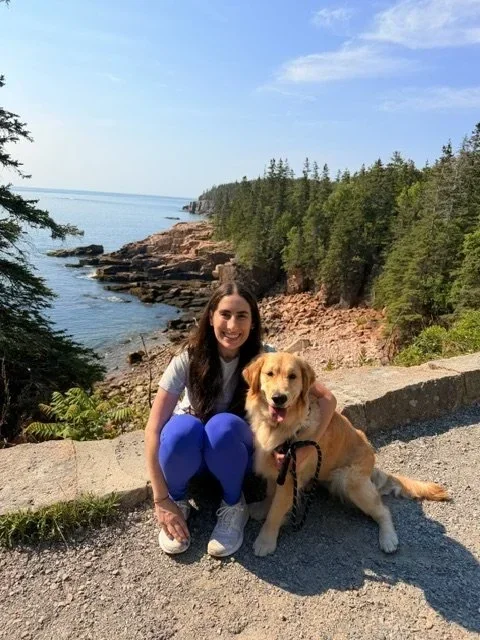
When I'm not working, you'll probably find me out on a long walk, exploring a nature trail, spending time with my dog niece, Shea, or finding a new sushi spot to try. I also love a good adult coloring book, which is one of my favorite ways to slow down and unwind.
I believe it's important to make time for the little things that bring us joy, and I try to practice that in my own life, too!
Services
Contact Me
What our work together looks likeI know the last thing most teens want is another adult telling them what to do. I'm not here to lecture them or tell them how they should feel. I'm here to get to know them, understand their perspective, and help them figure out what works for them.
Sometimes that means exploring the thoughts and beliefs that are keeping them stuck. Other times, it means practicing how to handle a difficult conversation, manage anxiety before a big test, navigate friendships and relationships, or adjust to the growing responsibilities of independence.
I believe teens and young adults are capable of so much more than they sometimes give themselves credit for. But when they're feeling anxious, overwhelmed, frustrated, or stuck, it can be hard for them to recognize their own strengths.

We make room for both the deeper conversations and the practical tools they can actually use outside of our sessions. And yes, there's room for humor, too! Therapy doesn't have to feel serious every second to be meaningful.
My goal isn't just to help teens and young adults feel better in the moment. It's to help them understand themselves, recognize their strengths, and build the confidence and skills to handle whatever comes next.
From more of a clinical lens, every teen is different, and I tailor our work to each individual’s personality, needs, strengths, and goals. I draw from these evidence-based approaches to help teens better understand themselves, build coping skills, and make meaningful changes in their everyday lives:
-
CBT starts with your thoughts. It's ALL about how you think about things. Sometimes, we have negative thoughts that make us feel bad. For example, if you fail a test, you might think, "I'm stupid." CBT helps you recognize these negative thoughts.
Your thoughts affect how you feel. So, if you think you're stupid because you failed a test, you'll feel sad or anxious. CBT helps you understand the connection between your thoughts and your feelings.
Your feelings lead to your actions. If you feel sad because of that test, you might avoid studying, which can make things worse. CBT helps you see how your actions are linked to your thoughts and feelings.
In therapy, we work to change your negative thoughts and behaviors. I'll help you challenge those thoughts and replace them with more positive or realistic ones. For example, instead of thinking, "I'm stupid," you might learn to say, "I need to study more for the next test."
CBT teaches you skills to cope with difficult situations. You'll learn how to manage stress, deal with problems, and face your fears. You'll see how your thoughts and feelings change over time, and how your new ways of thinking can lead to more positive feelings and behaviors.
CBT can help with many issues like anxiety, depression, stress, and more. It's a practical and effective way to work on your mental health and well-being. It's like training your mind to be healthier, just like you'd train your body in the gym. And the best part is, you can use the skills you learn in CBT for the rest of your life to handle whatever comes your way!
-
DBT helps you understand and manage intense emotions. It’s all about finding a balance between accepting yourself as you are and making changes to improve your life. Life can get overwhelming sometimes, especially with emotions like anger, sadness, and anxiety, but DBT gives you the skills to handle these feelings in healthier ways.
In DBT, we start by looking at how you feel in difficult situations. When emotions are intense, it can be easy to act impulsively, like yelling at someone or shutting down. DBT helps you pause and think about your response before acting, so you can make healthier choices.
One of the core skills in DBT is mindfulness—staying present in the moment and understanding your thoughts and feelings. DBT also focuses on emotional regulation, teaching you how to manage strong feelings and tolerate distress without making things worse.
Building healthy relationships is a big part of DBT. You'll learn how to communicate better, set boundaries, and manage conflicts in a calm, thoughtful way. These skills can improve how you interact with friends, family, and others in your life.
DBT can be especially helpful for challenges like self-harm, emotional highs and lows, relationship struggles, and stress. It’s a practical approach that gives you real tools to improve your emotional well-being.
Just like you train your body to stay healthy, DBT helps you train your mind to respond to challenges in healthier ways. The tools you learn can stay with you for a lifetime, helping you navigate tough situations and difficult emotions now and in the future!
-
SFBT is all about looking for ways to solve your problems. Instead of spending a lot of time talking about what's wrong, we will focus on what's going well and how to make things even better.
I will ask you questions to help you think about your goals and what you want your life to be like (not just what's bothering you). These could be things like improving your grades, getting along better with your family, or feeling less anxious.
Instead of trying to solve everything at once, SFBT breaks things down into small, manageable steps. Together, we will figure out what you can do right now to make things better.
This type of therapy encourages positive thinking. It's all about believing in yourself and your ability to make changes in your life. We will focus on your strengths and the things you're good at. I will help you recognize your abilities and how you've overcome challenges in the past.
It's called "brief therapy" because it usually doesn't take a long time. SFBT is quick and focused on what you can do right now to make your life better.
The best part is that you'll learn skills that can help you solve problems not just now, but throughout your life!
-
Psychoeducation is a way of teaching you about your mental health and how to take care of it.
I'll help you learn about how your brain works, how you think, and why you feel certain emotions. I'll provide information about common struggles like anxiety, depression, or stress. This can help you know what's going on when you or someone you know is struggling with these issues.
When you understand your mind better, you can make choices that help you feel happier and healthier.
I will also teach you coping strategies and regulation tools to manage stress and deal with difficult emotions.
Mindfulness is one of the most powerful coping strategies. It helps give your mind a break from the regrets of the past and the worries of the future. You will learn to be okay with just being in the present moment. It's like a mental reset button that can make you feel more relaxed and focused!
Both psychoeducation and mindfulness are tools that can help you take better care of your mental health. They can teach you how to understand and manage your emotions, andhow to stay present and focused. These skills can be really helpful in dealing with the ups and downs of life (especially life as a teenager!)
My Training & Education
CLINICAL LICENSURE & CERTIFICATION
New Jersey Licensed Professional Counselor (LPC) #37PC00887400 - Verify License
Pennsylvania Licensed Professional Counselor (LPC) #PC017920 -Verify License
California Licensed Professional Clinical Counselor (LPCC) #18291-Verify License
National Certified Counselor (NCC)
School Counselor (K-12)
Student Assistance Coordinator/Substance Awareness Counselor (SAC)
EDUCATION
Master of Arts in Counseling; Specialization in School Counseling, The College of New Jersey
Bachelor of Arts in Psychology, Pennsylvania State University
Teens say
they like working with me because I’m helpful, funny, easy to talk to, and "really, really nice".
parents say
they like the extra support, open communication, and positive changes in their teens.
schools say
they like my professionalism and how I understand their perspective.
let’s connect.
Individual and group sessions are available to teens throughout New Jersey, Pennsylvania, and California.